Taking a UK driving test in an EV
Access our network of thousands of charging points across the UK
Knowledge is power – particularly when it comes to your driving test
Qualifying for your driving licence in the UK is a rigorous process and there are nuances to think about before jumping behind the wheel, especially with EVs. Let’s take a look at some of the main considerations.
Can I take the UK driving test in an EV?
The short answer is yes, you can take your UK driving test in an EV. However, by passing your test in an EV, you’ll qualify with a Category B Auto licence. That’s great if you only ever intend to drive an EV or a car with an automatic gearbox. But if you want to drive a manual car further down the line, you’ll need a Category B licence, which means taking your test in a manual. Let’s break it down:
Category B – awarded when you pass your test in a manual vehicle; qualifies you to drive manual, automatic and EVs.
Category B Auto – awarded when you pass your test in an automatic or EV; qualifies you to drive automatic and EVs only.
Why are EVs classed as automatic?
EVs work differently to cars with traditional manual gearboxes. Crucially, they don’t have multiple gears or a clutch. So in effect they’re automatic – and that’s how they’re classed for the UK driving test.
Taking your test in an EV: other considerations
The absence of a clutch and gears to change can make driving an EV simpler than its manual counterparts. That said, there’s more to driving than shifting gears.
Whose car is it anyway?
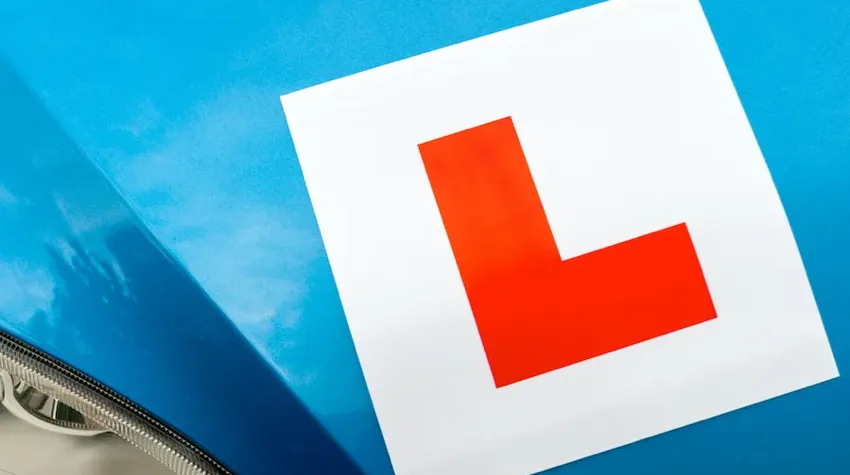
In the UK, the examiner or driving test centre do not offer testing vehicles; you need to supply one yourself. Often, people use the car they’ve been learning in – perhaps belonging to their instructor. Whether it’s an EV, auto or manual, it’s the driver’s responsibility to ensure the car is road legal, with a valid MOT certificate and insurance. Until you’ve passed your test, L-plates must be clearly displayed on both the front and rear of the car. There are other criteria the vehicle must meet – for example, giving the examiner all-round vision – as well as some specific exceptions, all listed here.
Know your vehicle
Taking your driving test is nerve-racking at the best of times. To put the odds in your favour, make sure you feel comfortable in the vehicle you decide to use for your test. That doesn’t just mean knowing how to adjust the seat. You need to know all the controls like the back of your hand, so you can focus on driving correctly.
EVs often feature future-facing technology and minimalist e-controls. Whether it’s finding the indicator, knowing how to adjust your mirrors, applying the parking brake or turning on the headlights, master the system in your chosen vehicle.
Different models have their own quirks and characteristics. How do you hill-start in your EV? Does it have an acceleration-limiter? And what about emergency stops? Practice all the manoeuvres in the car so you get to know it, leaving as little as possible to chance.
Stay switched on
Imagine how beautifully quiet our roads would be if everyone drove an EV. A minor drawback: pedestrians might be marginally less aware of cars approaching – particularly around blind corners. If the EV you take your driving test in operates quietly, be ultra-vigilant of other road users and don’t necessarily assume they can hear you coming.
Make sure you’re fully charged
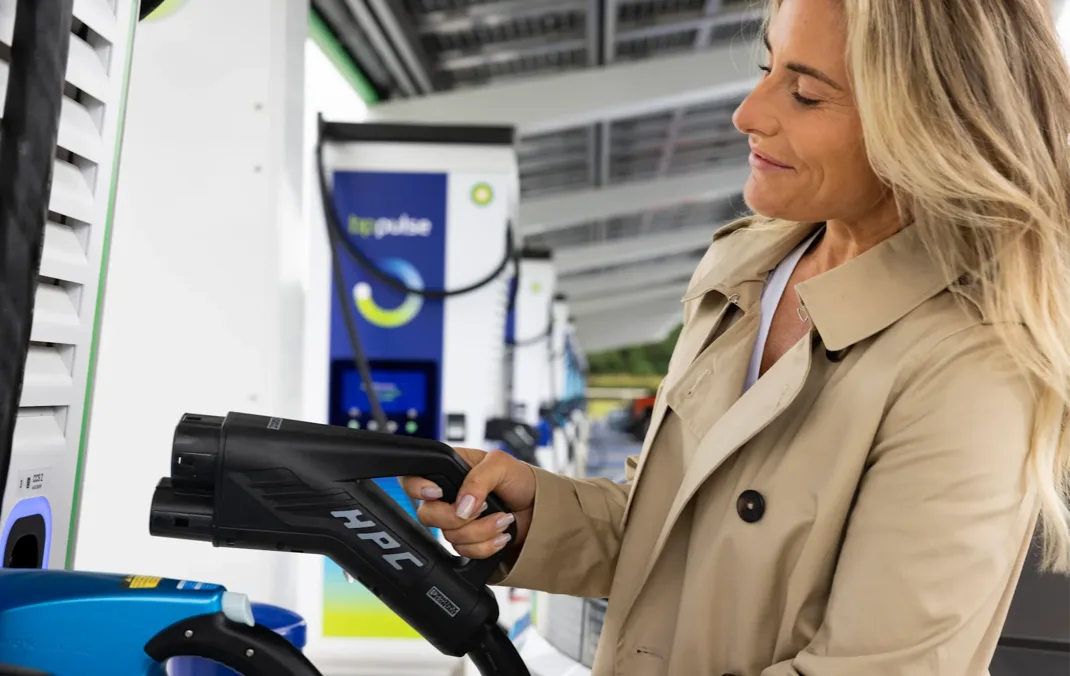
Just as you’d turn up at a written exam with a pen full of ink, make sure your EV is fully charged for your test journey. Plan ahead and make sure it’s good to go the night before. It’ll be one less thing on your mind, giving you a better chance of a decent night’s kip – crucial for concentration. If that’s out of your hands – for example, if you’re using your instructor’s EV – make sure you know how to handle a low battery situation should it arise during your test. Be sure to download the bp pulse app and locate the charging points in your area ahead of time.
In summary
The good news is that you can take your UK driving test in an EV. The even better news is that, thanks to the absence of gears and a clutch, EVs can be easier to drive that manuals. But whatever car you choose to test in, it’s absolutely vital that you know the model inside out. Let’s face it: driving tests put us under intense pressure, so we need to stack the odds in our favour.