How to drive an EV for the first time

Most new EV owners quickly get used to driving their new car. But if you’ve only ever driven a conventional vehicle, there are differences. Read on to see how you can prepare for your first time behind the wheel of an electric car.
1. Electric vehicles are quieter
It’s likely you already know this, but when driving an electric car, you may need to be aware of how quietly you’re travelling. To aid pedestrian safety many car brands now add artificial noise, but never assume a pedestrian can hear your approach.
2. Electric vehicles are automatic, not manual
If you’ve driven an automatic car, you’ll know what to expect. To start with, there’s no gear lever. Which means there’s also no clutch. There are only two foot pedals—your accelerator and your brake—so move your left foot out of the way as you won’t be using it.
Besides making a car simpler to drive, no gear box can mean fewer parts to maintain—potentially cutting your maintenance costs.
3. Electric vehicles can accelerate quicker
This can be a surprise for new EV drivers, but as there are no manual gear changes when increasing speed, acceleration is often smoother and faster. So, take care on your first few drives while you get used to the car’s torque being available so quickly.
4. Electric vehicles often have regenerative braking
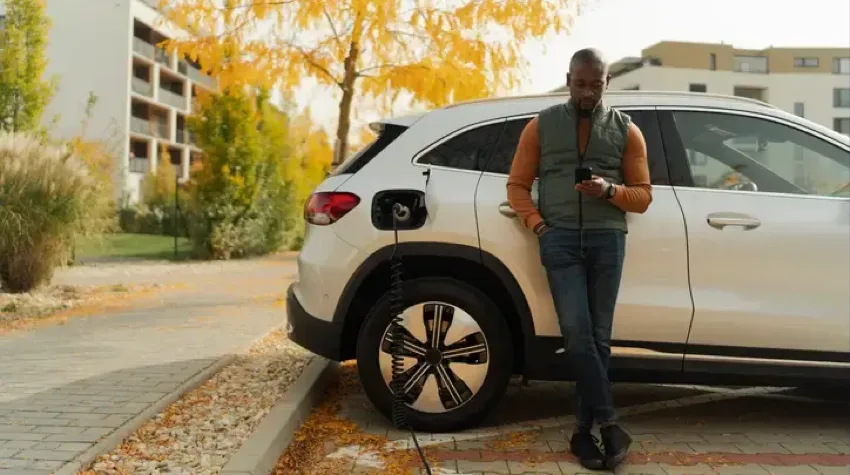
Many electric cars feature regenerative braking, which means the battery is topped up by energy that would otherwise be wasted as the car slows down. This means two things for you, as the driver. One, you may feel as though you’re braking slightly as soon as you lift your foot from the accelerator. And two, your battery can stay charged for longer.
5. Electric vehicles can handle differently
Electric cars typically have a skateboard platform, meaning the weight of the battery and other components is spread evenly across the vehicle, under the cabin floor. This gives EVs a lower centre of gravity than conventional cars, giving the driver a greater sense of stability on the road.
6. Electric vehicles have more luggage space
A final bonus for EV drivers is that with no engine to carry around, they have more room for luggage. Which could come in handy next time you go on holiday!