EV driving in hail? Tips to keep you safe
Ideas to manage those hail showers
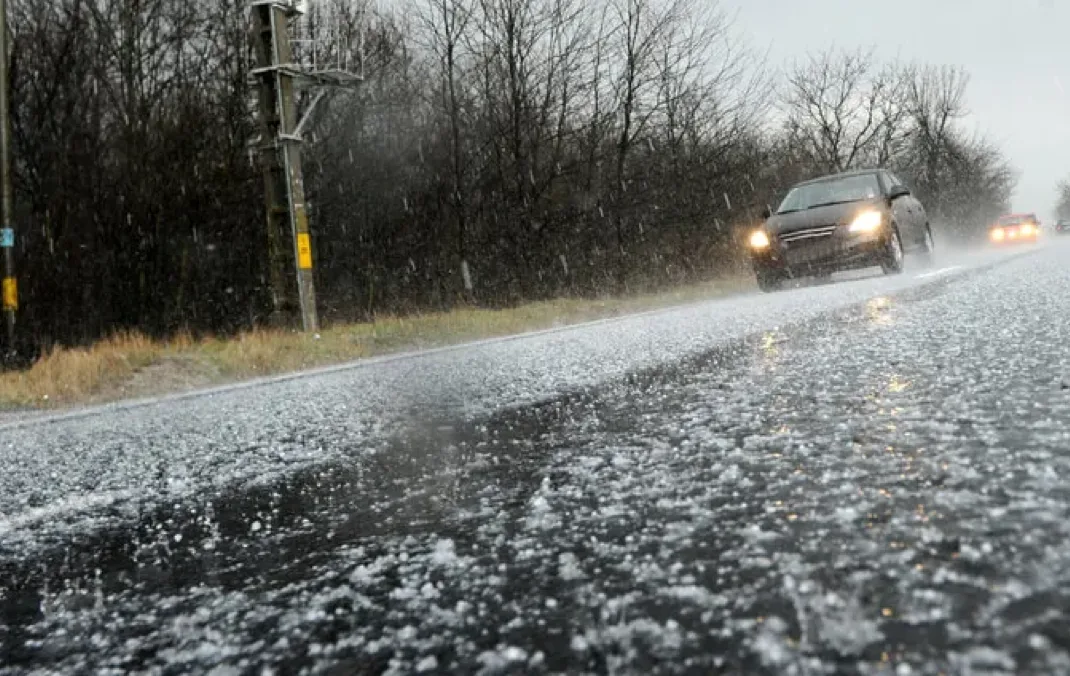
You’re probably already aware how less-than-ideal weather conditions can affect your driving. Rain and fog might impact how far you can see. Snow, rain and ice can make roads slippery and unpredictable. Even strong winds can affect your control over your car. As for hail? It's loud, intimidating and can decrease your braking distance and affect your visibility. So here’s a short, safety savvy guide to being an EV driver in the hail. Why not pop on the kettle and head to the sofa for a read? It won’t take long and could help you know what to do, how to drive, and where to take shelter, next time.
First – what is hail?
They say keep your friends close, but your enemies closer. So let’s understand hail. It is frozen rain formed in thunder clouds. These frozen drops can be stored in clouds for a long time, upheld by wind, being repeatedly coated in ice until they’re heavy enough to fall to the ground. And although we can’t scientifically prove this, this tends to happen most when we’ve stepped outside without a coat.
When does it most usually happen?
It depends where you are. This article from the Met Office reveals hail is most common in western parts of Britain, and more likely to occur in the winter there. If you live in eastern England or south east Scotland, you may experience it most in the spring , while in inland northern Britain and Scotland you’re most likely to get it in the summer. In the UK there have rarely been examples of the very strong hailstorms that occasionally make international headlines – the Met Office cites a ‘significant hailstorm’ in Devon dating back to 2008, which gives us some idea of the rarity of this. Still: hail happens. And here are some safety tips when it does.
1. Long trip ahead? Check the weather forecast and pack ahead
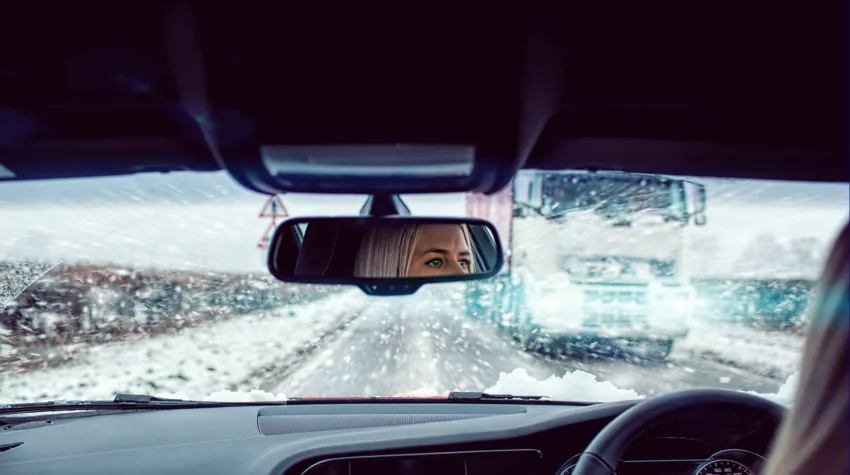
We often say you can't be too prepared when it comes to a long journey. If there are weather warnings in place on your intended route, consider identifying somewhere before you set off where you can rest or stop driving if you need to. You may already know that the Highway Code says drivers shouldn’t drive in snowy or icy conditions unless essential. If it is, they recommend taking an emergency kit of de-icer and scraper, torch, warm clothing, boots, jump lead, and food and drink, amongst other essentials. Why not have a look at the full kit and keep it in a handy bag, so you’re prepared for all eventualities?
2. Adjust your driving during hailstorms
If you’re driving in hail, choose a safe place to brake gently and check your grip. If the steering feels unresponsive this may mean you’re driving on ice and your vehicle could be losing its grip on the road. Consider stopping and adjusting your driving for icy conditions. As a refresher, here’s what the Highway Code says about driving in ice (specifically, rules 228 – 231). Chances are you know this all already but when it comes to safety in bad weather a refresher is never a bad thing.
In the icy conditions that hail can bring, increase the gap between you and the car in front, as the stopping distance can be up to 10 times higher.
When the roads are icy, take extra care when driving. You’ll want to avoid sudden actions as these could cause loss of control. Consider accelerating and braking gradually.
Bends in the road ahead? Brake progressively on the straight before you reach the bend, and steer smoothly around it, avoiding sudden actions and accelerations. Always check the highway code for the latest guidance.
3. Look for a safe spot
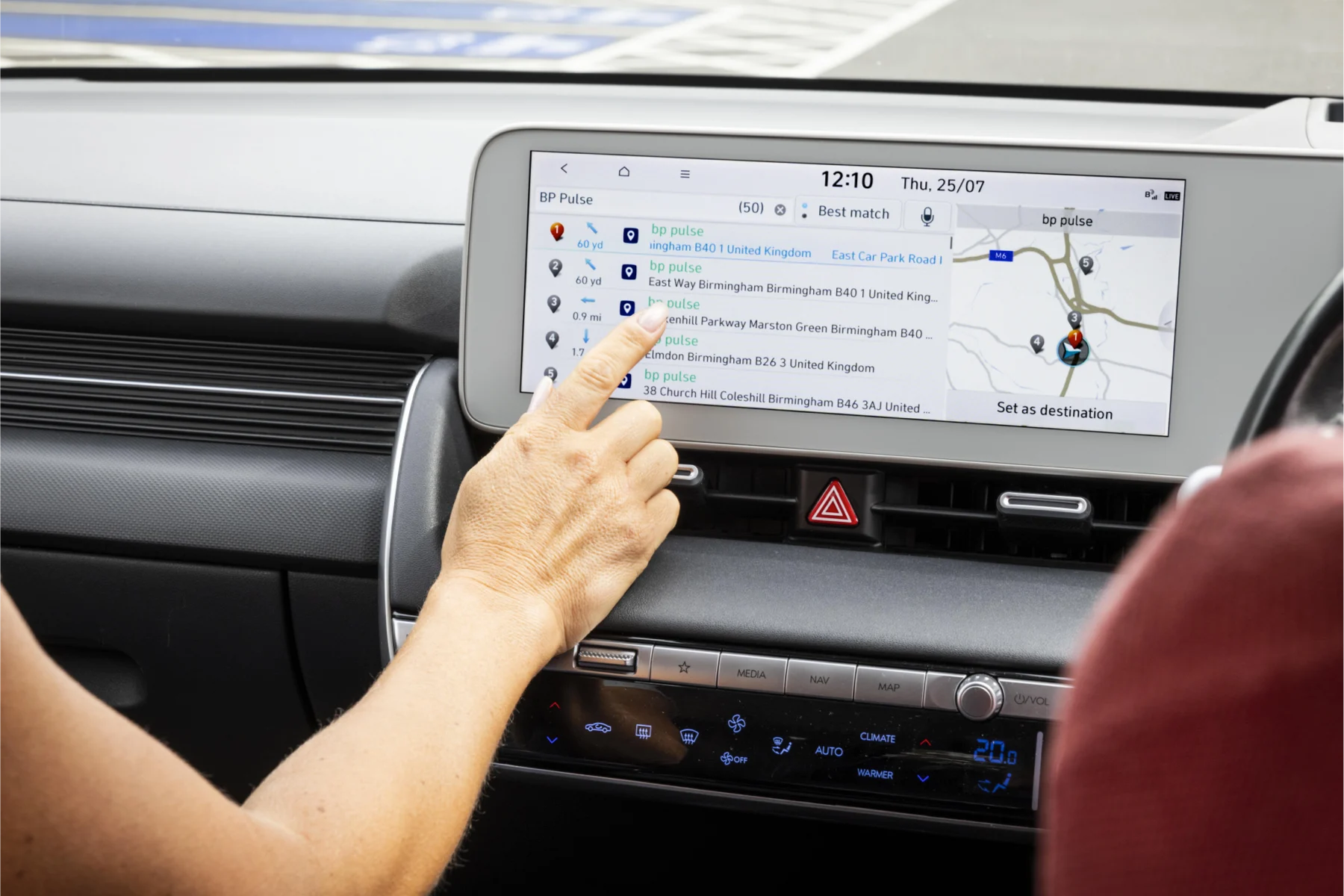
If that hail storm comes along, consider pulling over if you can until it passes. Why not use the free bp pulse app to see where we are on your route, and if you can, head to one of our charging sites? Consider planning a route that features charging sites near shops or restaurants, where you can wait for the hail to pass while also topping up your battery, enjoying a quick coffee, lunch or stocking up on groceries. If you're seeking out shelter in a heavy hailstorm, aim for covered spots if possible, to minimise damage to your vehicle.
4. Look out for others
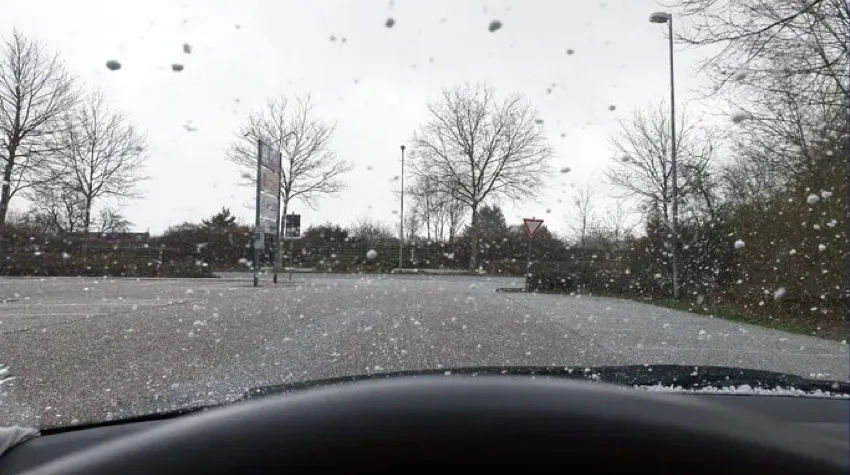
Watch out for other road users - including cyclists and motorcyclists who might swerve or skid during a hailstorm, or change route unexpectedly, for example, if they attempt to exit the carriageway in poor visibility.
5. All over? Give your EV a once-over
If you've been in a heavy hailstorm, it's always worth checking your car for any damage. Things to look out for are cracked windows or scratches to the windscreen. If you’re fairly new to car ownership, you could consider getting the names of reputable garages in advance, so you’ve got a handy phone number for any bodywork or repair needed.
Bonus fun fact:
Those tiny white things we often mistake for hail in the winter? That’s actually something called graupel. It’s smaller in size and less dense than hail, as this article from the Royal Meteorological Society explains. In other words, graupel isn't hail (though it does have a great name). We hope this puts your mind at ease about driving your EV in hail. For more tips about driving and charging in varying temperatures, weather and seasons, why not browse Going Electric?