EV 101: The electric vehicle dictionary
Find out about charging your EV with bp pulse
Are you considering making the switch to an electric vehicle? Or are you new to owning and caring for your EV?
You may notice that there is a lot of new vocabulary that can help you learn your way around charging and operating an EV. This guide covers essential concepts and terms you might encounter, and while it reflects current terminology and regulations, always check for the latest updates as laws and standards can evolve.
Battery electric vehicle (BEV)
A BEV is an electric vehicle that operates exclusively on energy stored in a rechargeable battery pack. Unlike hybrid vehicles, BEVs don’t rely on gas- or diesel-powered engines at all.
Connector
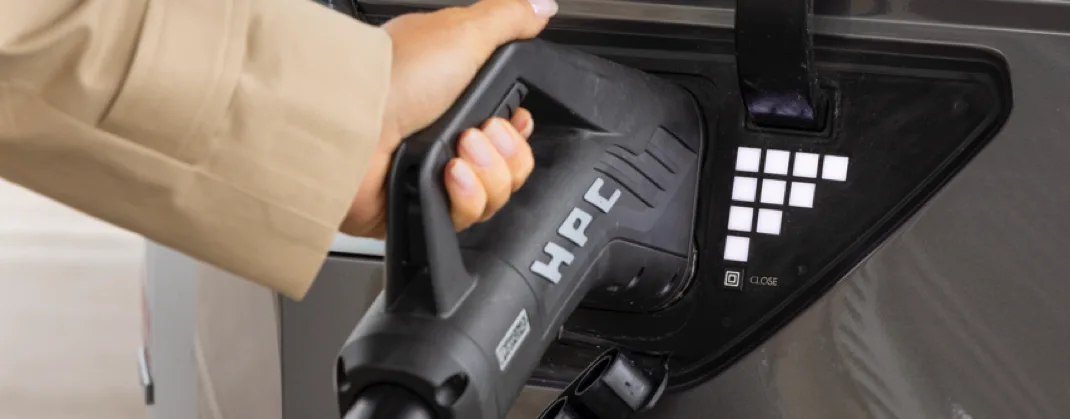
A connector is a device used to connect the electric vehicle to the electric vehicle supply equipment (see below), allowing for the transfer of electric power. Connectors are available in various types, each designed to work with specific types of vehicles and charging stations. The most common DC fast charging connectors used in the US are CCS or NACS (Tesla). Learn more in our blog on types of ports.
Electric vehicle (EV)
An EV is a vehicle that runs on electricity stored in a battery or fuel cell and does not have a gas- or diesel-powered engine.
Electric vehicle supply equipment (EVSE)
This is the equipment used to supply electric power to recharge electric vehicles. It includes the charging station, cable, and connector that allow the vehicle to be charged from an external power source.
Home charging
Home charging refers to the process of charging an electric vehicle’s battery at home, typically using a dedicated device installed on a property. Learn more.
Hybrid vehicle
A hybrid vehicle has both an electric motor and a gas- or diesel-powered engine. The vehicle can operate on either or both power sources, depending on driving conditions and the driver’s actions.
Kilowatt hour (kWh)
A kilowatt hour is a unit of energy used to measure the amount of electricity consumed or produced over a period of time. It is often used to measure the capacity of an electric vehicle’s battery. Learn more.
Lithium-ion battery
This is a type of rechargeable battery commonly used in electric vehicles. Lithium-ion batteries are known for their high energy density, long cycle life, and fast charging capabilities.
On the go charging
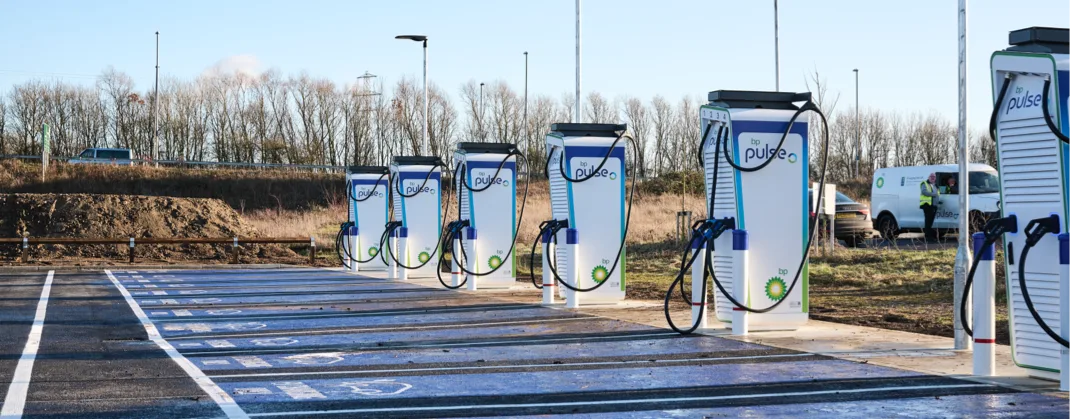
On the go charging refers to the process of charging an electric vehicle’s battery while out and about, using public charging stations instead of home charging. Use the bp pulse app to explore our public charging locations in the US. Learn more.
Plug-in hybrid electric vehicle (PHEV)
A PHEV is a hybrid vehicle that can be charged using an external power source. It has an electric motor and a gas-powered engine, and can operate on either or both power sources.
Range
This refers to the distance that an electric vehicle can travel on a single charge of its battery. Range is a critical factor in the usability and practicality of electric vehicles.
Range anxiety
Range anxiety refers to the fear or concern that an electric vehicle’s battery will run out of charge before the driver reaches their destination. There are many strategies to mitigate this anxiety when adopting an EV. Learn more.
Regenerative braking
Regenerative braking is a technology used in electric and hybrid vehicles that converts some of the energy lost during braking into electricity, which is then stored in the vehicle’s battery.
Tailpipe emissions
Tailpipe emissions are the pollutants emitted by a vehicle’s exhaust system while it is running. These emissions can include carbon dioxide, nitrogen oxides, and particulate matter.
Zero-emission vehicle (ZEV)
A zero-emission vehicle is a vehicle that emits no tailpipe pollutants from its onboard source of power. In the context of electric vehicles, this refers to vehicles that run on electric power and produce no direct emissions.
This guide has provided you with essential concepts and terms to help you get acquainted with your EV. Embrace the journey and drive with confidence in your electric vehicle!