Five reasons fleets should consider mobile and non-permanent charging

Find out about electrifying your fleet with bp pulse
Customizable, non-permanent charging solutions can accelerate deployment, save money, and provide flexibility for physical constraints
As fleets look into fueling their new EVs, figuring out charging infrastructure for those vehicles can be daunting. While permanent infrastructure is the traditional route to support EVs, deployment timelines and physical constraints can make permanent infrastructure installation challenging.
The typical timeline for installing permanent infrastructure is nine to 18 months, and that assumes everything goes according to plan. With the project complexity and number of stakeholders involved, plus global supply chain challenges, there are cases where installation is delayed, leaving fleets with vehicles arriving and no electric fuel available. Beyond timeline restrictions, some fleets are unable to install permanent infrastructure entirely, either because they operate on leased or shared property, don’t wish to dig into the ground, or crave portability.
By working closely with our fleet customers, we’ve learned where permanent infrastructure may not be the right answer and created customizable solutions that keep EV fleets working and on the road. Enter the suite of bp pulse Inrush solutions — including containerized charging, mobile charging, and other above ground solutions. Our non-permanent charging products can significantly reduce the timeline to install infrastructure, while also saving on project costs.
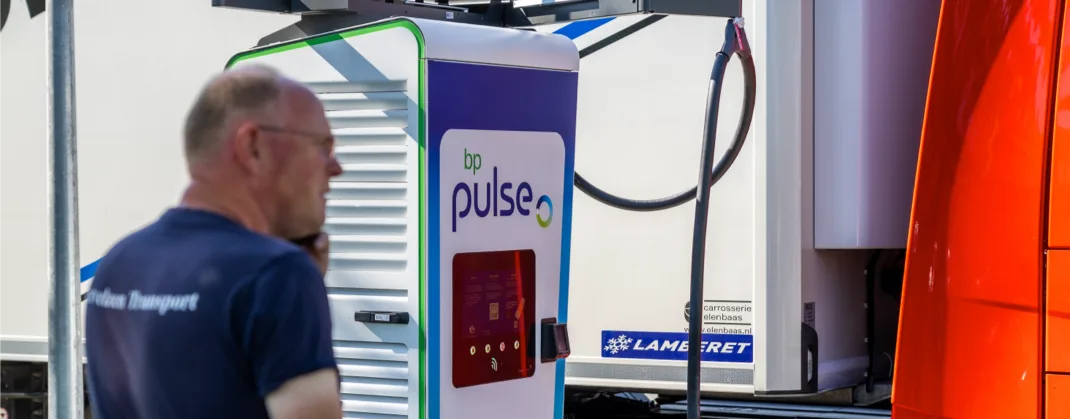
Features of these solutions include:
Containerized charging
Upcycled 20’ or 40’ shipping containers with exterior charger mounts and electrical switchgear inside. Containers are pre-assembled off-site and can support a mix of charger types and power levels. Once placed on-site there is minimal construction needed to supply power to the container.
Mobile charging
Fully portable battery-supported charging solutions either on a trailer, wheels or portable-skid. Existing access to electricity is not required making it deployable anywhere.
Surface mount charging
Installing above-ground cable raceways and portable transformers which are interoperable with any charger type. With no trenching required for electrical wiring, this solution is quick to install and easy to move while providing the convenience and stability of permanent infrastructure.
So, is semi- or non-permanent charging infrastructure right for your electric vehicle fleet? From our experience, these are the five common barriers that non-permanent infrastructure can overcome:
Not owning the land
Not all fleets own the land they operate their vehicles on, leaving them to work with the land owner to figure out how to install permanent charging infrastructure. This can be difficult to manage as the infrastructure installation heavily impacts the land and the fleet may not plan on staying at the location for more than three to ten years. Our non-permanent solutions have very little to no impact on the physical site, and can be moved when needed.

Scaling faster than infrastructure can be built
It’s not always the case that fleets receive their EVs at the same time that their permanent charging infrastructure comes online. Delays can happen when building the infrastructure, including issues with supply chain, design, utility coordination, and permitting. These delays can be anywhere from six to 12 months from when the fleet receives the vehicles, leaving them without a way to charge during this period.
When transit customer Anaheim Transportation Network (ATN) had a delay in getting their permanent charging depot energized, bp pulse worked with them to find an interim solution. This is where the idea behind non-permanent containerized charging was born. In September of last year, we deployed two containers outfitted with five chargers each to support their fleet of 46 electric buses. Without this option, ATN would have not been able to run their electric buses, severely limiting their ability to serve their community.
Issues with traditional charging infrastructure
Sometimes the installed charging equipment experiences issues getting online, staying connected, or connecting to the vehicle. These faults can take awhile to resolve, meanwhile the EVs are left without a way to fuel.
Depending on the severity of the issue and expected timeline to get online, any of our non-permanent solutions could be implemented in the interim. If it’s a short timeline, mobile charging can be wheeled onsite to charge the EVs. If it will take longer to get the permanent infrastructure back up and running, a container or above ground charging can be placed on the site and moved or integrated into the regular charging operations.
Temporary fleet locations
Some fleets don’t operate at stationary locations, for example, large events, conferences, and TV film sets. In these cases it doesn’t make sense to have permanent charging stations, both for the flexibility and the reduced need for charging vehicles all at once. In addition to charging fleets, mobile charging can also be used to charge personal vehicles attending events.
Since mobile charging is battery-powered and contained on wheels units can move to where the vehicles need to be charged. Each mobile unit can be customized to charge a variety of vehicles, including using different battery sizes, and AC and DC chargers.
Stranded vehicles on the road
There may be instances where the EV can’t make it back to the depot for charging. Light-duty vehicles may have more options for road-side assistance, but this is much more limited for medium- and heavy-duty vehicles. In these instances, mobile charging can be transported to the stranded vehicle. Having a backup mobile battery as part of your fleet operations can reduce the time and cost it takes to get vehicles back on the road.
Deploying EVs faster with non-permanent solutions
In all of these cases, the fleets could have been without a way to charge or use their EVs. The obstacles permanent charging presents can be a barrier to deploying EVs, but with bp pulse’s mobile and portable charging these fleets don’t need to wait on delays or issues with their infrastructure.