Driving sustainability: How carbon credits can benefit your electric fleet
Explore tailored EV charging solutions with bp pulse
Fleet operators may save energy and operational costs while earning revenue through carbon credit markets by switching to EVs
Revenues from carbon credits have become a game-changer for electric fleets, allowing them to capitalize on their transition efforts and lower their total cost of ownership. These opportunities are already available in some U.S. states and are becoming more widespread.
What are carbon credit programs?
Carbon credit programs are components of emissions reduction programs established by states or regions. These programs generally include a target for carbon reduction by a certain date and have compliance requirements. They also include a marketplace to buy and sell carbon credits, which represent quantities of greenhouse gasses that have either been avoided or removed from the air.
There are several programs operating in the U.S. today. The Low Carbon Fuel Standard programs in California, Washington, and Oregon target a long-term reduction in carbon intensity and set interim reduction goals. Fleets that demonstrate emissions below program standard generate credits that can be sold to those exceeding the standard.
Cap-and-Trade (or Cap-and-Invest) programs in California and Washington (and coming soon to New York) set a long-term greenhouse gas reduction goal, and then either grant or auction emissions allowances (e.g. credits) used to demonstrate compliance. These programs may also reward tradable credits to projects that lower emissions or sequester carbon.
There are also markets for Renewable Energy Credits (RECs) representing the environmental attributes of renewable electricity generation. Electric fleets can purchase RECs to offset the carbon emissions from the electricity they consume and claim 100% emissions-free transportation.

How carbon credit programs work
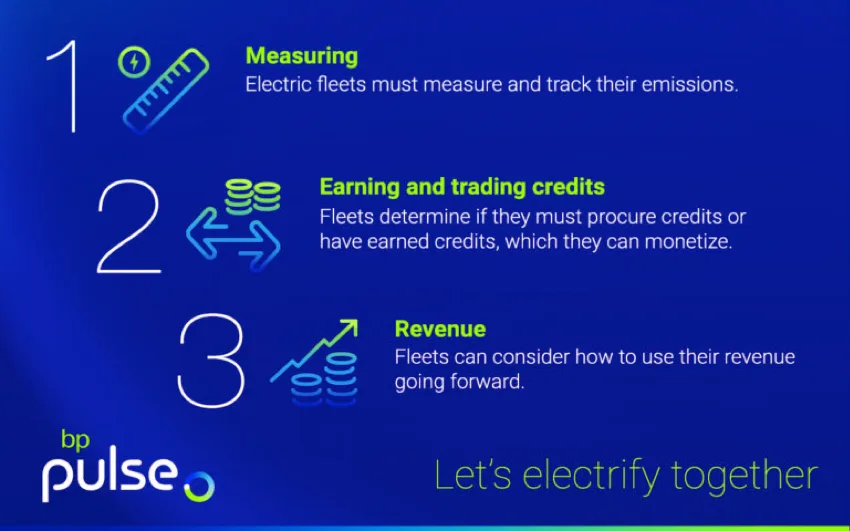
Each state has different rules and program guidelines. Electric fleet operators need to understand the specific requirements and opportunities included in the regions where they do business. Generally, carbon credit programs tend to follow some variation of these steps:
Measuring
First, electric fleets must measure and track their emissions, and report this data to their program administrator. There are multiple tools out there that fleets can utilize to do this. Our Omega charge management software automatically tracks energy use and emissions in real-time, providing fleets with the necessary data collection and reporting services.
Earning and trading credits
Following data collection, fleets can determine if they must procure credits to offset emissions, or are in compliance with their emissions allocation and eligible for credits. If eligible for credits, fleets have a valuable commodity to sell, providing them with a new revenue stream.
For example, in California’s Low Carbon Fuel Standard program, electric fleets earn credits because the carbon intensity of electricity is lower than the program standard. The credits earned through electric transportation can either offset the fleet’s fossil fuel use or can be sold to entities that exceed the program standards. The value of these credits can vary based on market demand and the overall supply of carbon credits.
Revenue
Following the trading process, fleets can then consider how to use their revenue going forward, including the opportunity to further invest in electrifying their fleet. Many electric fleets take a phased approach and scale up over time. Trading proceeds can finance electrification to reduce a fleet’s carbon footprint.
Benefits of carbon credit programs
Financial incentives
One of the most compelling advantages of carbon credits for electric fleets lies in the financial incentives they provide. When a company invests in electric vehicles and reduces its carbon emissions, it can earn carbon credits as a reward. These credits hold tangible market value, allowing companies to generate additional revenue streams by selling them to other businesses seeking to offset their emissions. The additional revenue improves the business case for electric vehicle ownership and shortens the investment payback.
Regulatory compliance
As governments expand environmental regulations, carbon credits present a market-based option for meeting emission reduction targets. Electric vehicle fleets, where eligible for carbon credits, enable an organization to meet or even exceed these regulations. By effectively managing their carbon footprint, fleets not only comply with legal requirements but also contribute to a healthier environment and inspire others to follow suit.
Company image
Companies that participate in carbon credit programs for their electric fleets often benefit from an improved corporate image. Public awareness and concern for the environment have reached new heights, and consumers increasingly favor businesses that demonstrate a commitment to sustainability. By taking a proactive approach towards reducing their carbon footprint, these companies can boost their brand reputation and attract environmentally conscious customers.
Where to start
To gain the greatest benefit from carbon credits, you’ll need to understand how to track and monetize your carbon footprint. We’ve helped fleet customers automate this process with our charge management software, Omega.
If you’re looking for more support through the process, contact us! We can help to register your electric vehicle supply equipment with the carbon credit program, track your energy use and emissions, and monetize your earned carbon credits.